October 2TiP – Systematic Disciple-Making for Next-Gen
By Ps Benjamin Tan, Bethel Assembly of God

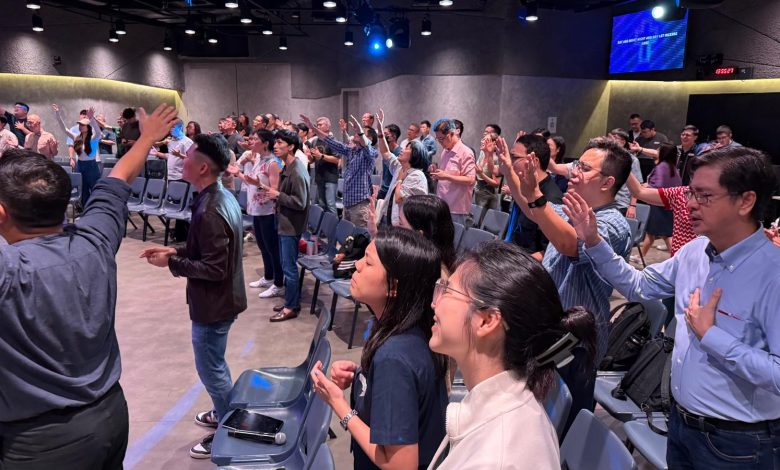
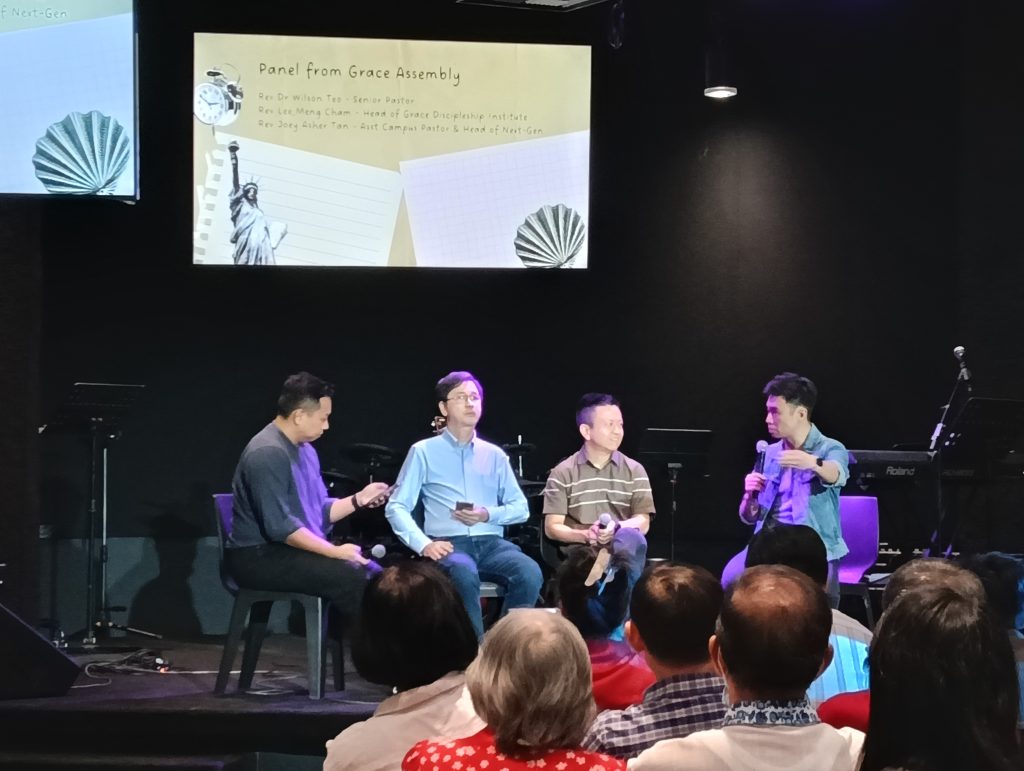
On October 16, 2025, our Next-Gen ministers and pastors came together to learn on Life Stage Track (LST), a discipleship track of Grace Assembly of God (AG).
We are grateful to Grace AG for their dedication, love, and perseverance in developing their discipleship curriculum since 2019. We are thankful for the generosity of Grace AG to share their Next-Gen curriculum (Life Stage Track, LST).
Why Does This Systematic Disciple-Making Curriculum Matters?
- Bridges discipleship gaps and builds strong foundations: Establishes a systematic, intentional pathway that nurtures every child’s faith from early years to adulthood, ensuring both the individual and receiving pastor understand their spiritual journey and growth.
- Enables strategic alignment and unity: Helps pastors, staff, and leaders plan with foresight—aligning teaching, ministry goals, and events across all life stages while eliminating overlaps, conflicts, and siloed ministries.
- Ensures continuity and sustainability: Maintains consistent discipleship even through leadership transitions, allowing new pastors to build on existing foundations rather than start from scratch, safeguarding the church’s long-term disciple-making efforts.
At the heart of Grace AG’s discipleship efforts lies the Grace Disciple-Making Framework (GDMF), built upon their vision of “more people, more like Jesus.” Within this framework sits the Disciple-Maker Track (DMT), which includes the Life Stage Track (LST). This article focuses on the Next-Gen Life Stage Track, which covers children, youth, and young adults—from approximately ages 3 to 30.
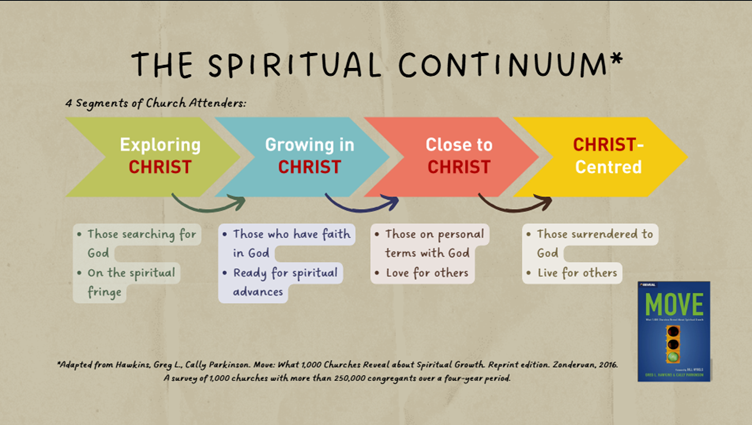
The spiritual continuum within the DMT identifies the various segments of church members and their faith journeys. For children, youth, and new believers, the focus is on exploring and growing in Christ, while young adults are guided toward being close to Christ. (For more details, visit: graceaog.org/tg_gdf-part-1)
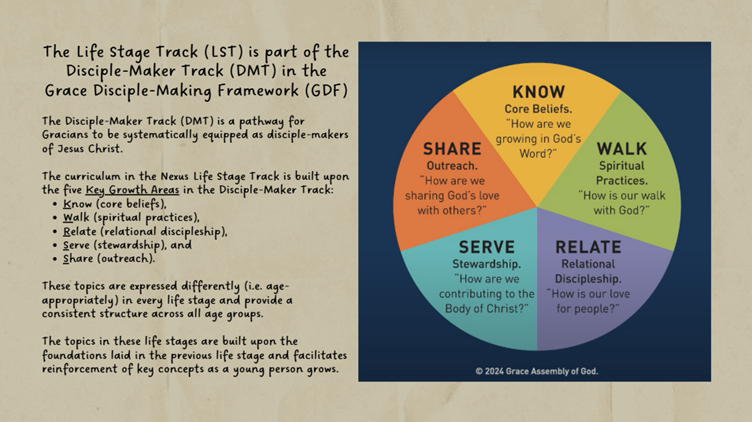
The Next-Gen LST is built around five key growth areas essential for disciple-making:
- Know (core beliefs) – How are we growing in God’s word?
- Walk (spiritual practices) – How is our walk with God?
- Relate (relational discipleship) – How is our love for people?
- Serve (stewardship) – How are we contributing to the Body of Christ?
- Share (outreach) – How are we sharing God’s love to others?
(For a deeper explanation, visit: graceaog.org/tg_gdf-part-2 )
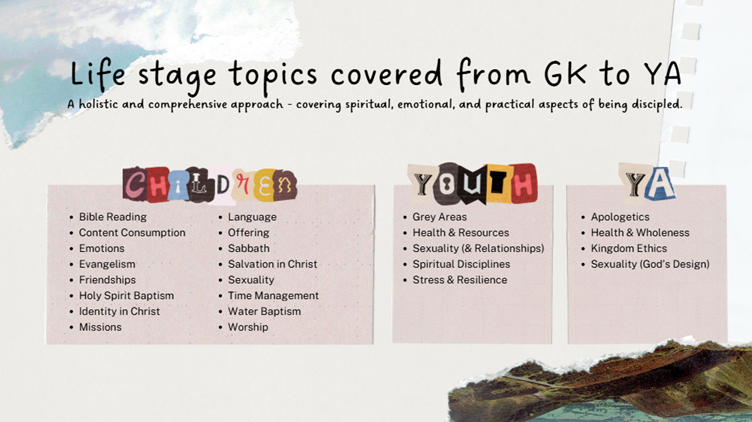
These five areas guide the design of the Next-Gen curriculum, shaping discipleship topics for each life stage. 16 foundational topics have been identified as critical for children, which are revisited and expanded upon in the youth and young adult phases. The curriculum runs on a four-year cycle, allowing young people to encounter each topic at least once during their growth journey.
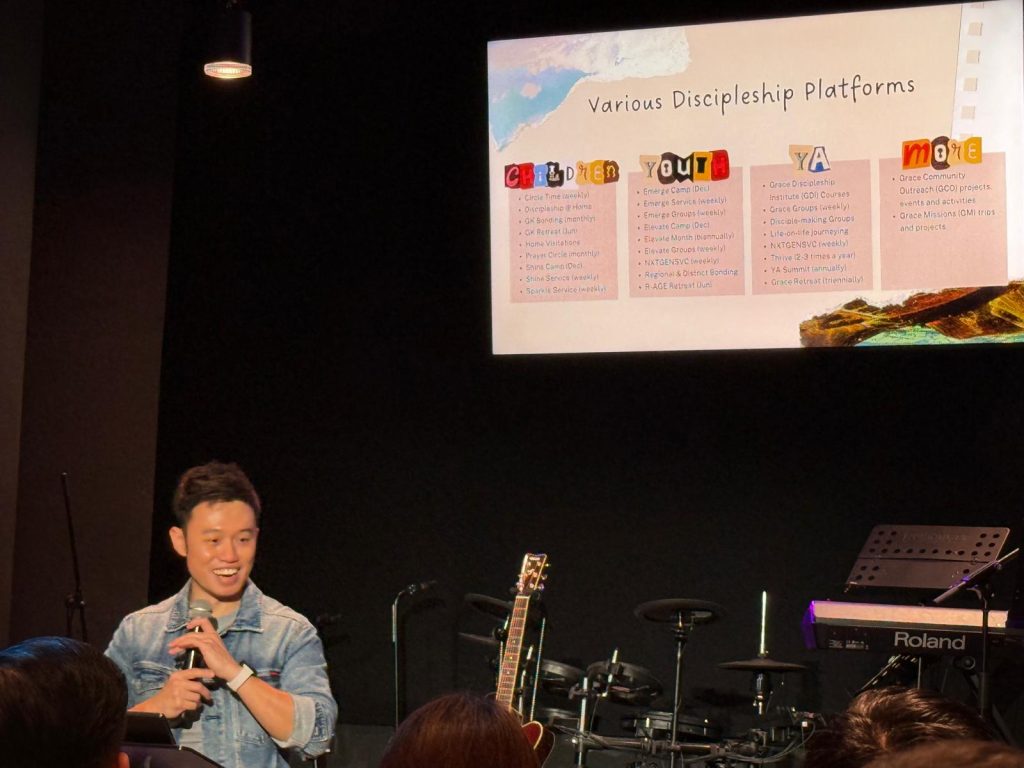
All these topics are implemented through various discipleship platforms (services, cell groups, fellowships, camps, retreats, courses, serving, outreach, mission trips, etc) looking at the frequency and objectives of each platform to see how best to deliver the discipleship topic.
Aligned with the five key growth areas, Grace AG has also established desired outcomes for each life stage and encourages parental involvement in the discipleship journey. For example, in the table below, Biblical Sexuality and Belonging & Contributing to the Body of Christ demonstrate clear progressive desired outcomes from pre-teen to youth stages, alongside practical ways parents can partner in nurturing their child’s spiritual growth.
| 5 Key Growth Areas | Pre Teen Desired Outcomes | Pre Teen Parents Involvement | Youths Desired Outcomes | Youth Parents Involvement |
| Know | Articulate and affirm God’s design of sexuality. | Equip self, understand current trends and be prepared to engage preteen in sexuality issues and conversations and create a safe space at home for such conversations | Articulate and affirm God’s design of sexuality. | Equip self, understand current trends and be prepared to engage preteen in sexuality issues and conversations and create a safe space at home for such conversations |
| Walk | Live sexually pure life (and find restoration) | Pursue sexual purity | ||
| Relate | Relate to one another in friendship and boy-girl relationships | Relate to one another in friendship and boy-girl relationships Create safe (truthful & grace-filled) spaces for conversations | ||
| Serve | Serve in one ministry within or beyond | Partner with and support preteen to serve | Youth are to stay faithful in serving in a ministry | Help youth to prioritize his/her cell group and community activities and dialogue periodically with youth about his/her belonging and contribution (especially after key activity, ie camp) |
| Share | Invite friends to a Christmas event Share with friends about the death and resurrection of Christ | Youths are to continue inviting friends to church services/outreach programs and actively share the gospel with them |
We will reinforce what Rev Joey Asher Tan got everyone in the event to recite.
Five takeaways:
- This is not a magic silver bullet, and
- This is not for every church.
- This is possible if all are onboard, but
- This requires years of hard work.
- This requires lots of prayer and dialogue.
As we read this article, we give thanks once again for the dedication and effort Grace AG has invested in developing this curriculum—one that inspires us to pray and begin meaningful conversations with others. As John 14:26 (ESV) declares, “But the Helper, the Holy Spirit, whom the Father will send in my name, He will teach you all things and bring to your remembrance all that I have said to you.” Let us patiently lean on the Holy Spirit for wisdom and guidance as we seek to implement this in our own churches.